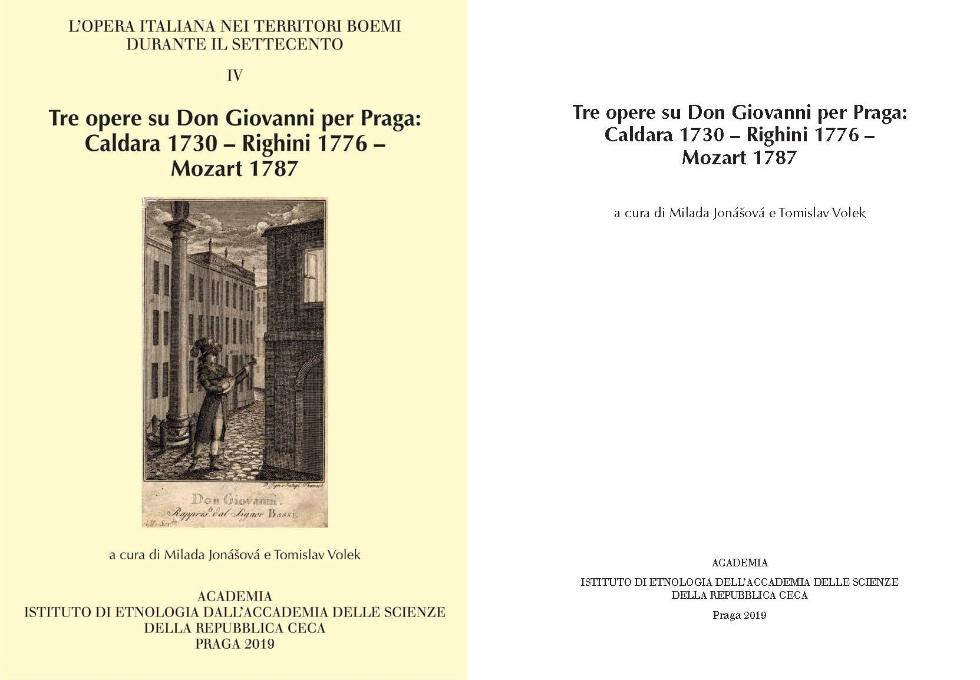
Tre opere su Don Giovanni per Praga: Caldara 1730 - Righini 1776 - Mozart 1787,
a cura di Milada Jonášová e Tomislav Volek, Praga: Academia 2019
(L’opera italiana nei territori boemi durante il Settecento 4), 287p.
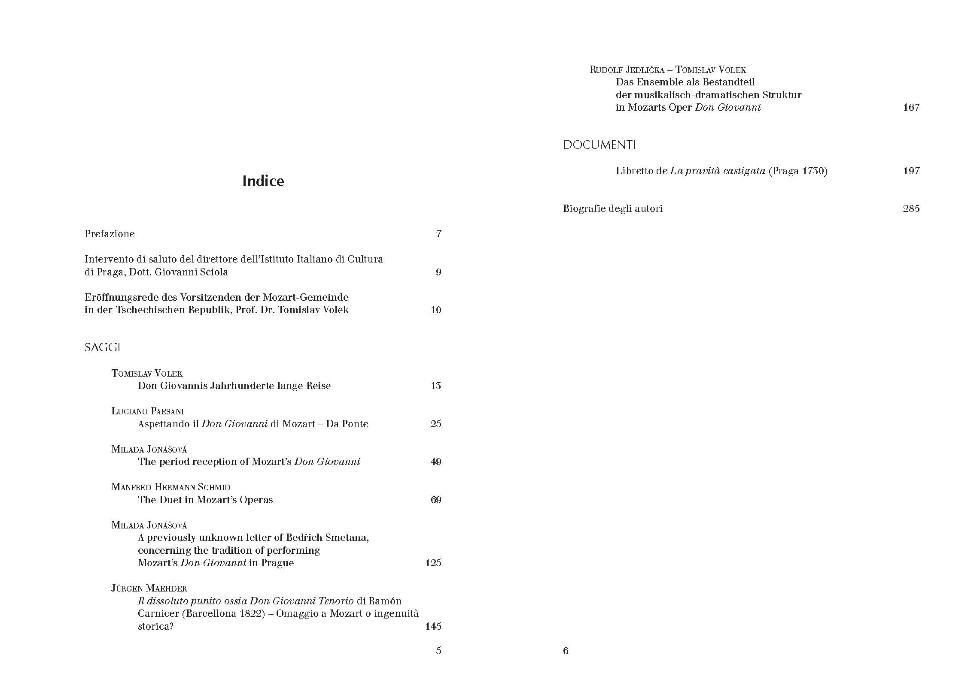
Předkládaný sborník příspěvků je věnován tématu tří dongiovanniovských oper, které byly v 18. století vytvořeny v Praze a měly zde ve třech různých divadlech i své světové premiéry. Sborník je realizován jako čtvrtý svazek edice „Italská opera 18. století v českých zemích“. Tomislav Volek v úvodním příspěvku na téma „Cesta Dona Giovanniho staletími“ porovnává nejvýznamnější divadelní verze postavy šlechtického svůdce Dona Juana od té nejstarší od Tirso de Moliny po verzi autorů Da Ponte - Mozart. Luciano Paesani (Chieti-Pescara) shrnuje poznatky o změnách v libretu Righiniho opery Il convitato di pietra, komponované pro Prahu 1776 a prováděné pak ve Vídni a v Esterháze. Milada Jonášová na základě nově nalezených partitur Dona Giovanniho pražské provenience popisuje různé drobné změny, které Mozart udělal v průběhu nastudovávání opery před pražskou premiérou a které pak dodatečně nezapsal do své autografní partitury. Dochovaly se však v pražských partech a staly se součástí opisů partitur, které se z Prahy šířily do Evropy. Manfred Hermann Schmid (Augsburg) analyzoval specifické znaky duet v Mozartových operách. Další příspěvek Jonášové je věnován nalezenému dopisu Bedřicha Smetany Johannu Bernhardu Guglerovi z 21. srpna 1868 o zbytku dochovaných provozovacích partů z premiéry opery Dona Giovanniho v roce 1787. Jürgen Maehder (Salcburk) popsal ve střední Evropě ne příliš známou dongiovanniovskou operu Il dissoluto punito ossia Don Giovanni Tenorio od Ramóna Carnicera (Barcelona 1822) a srovnal ji s Mozartovým Donem Giovannim, na něhož de facto Carnicer navazuje. Součástí sborníku je rovněž klíčová kapitola z pražské disertace (1973) Rudolfa Jedličky, pojednávající o zvláštnostech ansámblů v Mozartově Donu Giovannim, poprvé přeložená do němčiny a upravená Tomislavem Volkem. V její příloze jsou zveřejněny různé archivní materiály o Rudolfu Jedličkovi (1920?1989) jako vynikajícím interpretu postavy Mozartova Dona Giovanniho, kterého mnohokrát ztvárnil i na předních evropských scénách včetně berlínské a vídeňské Staatsoper.
The present volume of collected studies is devoted to the theme of three Don Giovanni–related operas that were created in Prague in the eighteenth century and received their world premieres there in three different theatres. The volume constitutes the fourth instalment of the series Italian Opera of the Eighteenth Century in the Czech Lands. In the opening essay, entitled “The Journey of Don Giovanni through the Centuries,” Tomislav Volek compares the most significant theatrical versions of the figure of the aristocratic seducer Don Juan, from the earliest treatment by Tirso de Molina to the version by Da Ponte and Mozart. Luciano Paesani (Chieti–Pescara) summarizes current findings on changes to the libretto of Vincenzo Righini’s opera Il convitato di pietra, composed for Prague in 1776 and subsequently performed in Vienna and Eszterháza. On the basis of newly discovered Don Giovanni scores of Prague provenance, Milada Jonášová describes a series of minor modifications made by Mozart during the rehearsal process prior to the Prague premiere—changes that were not subsequently entered into his autograph score. These alterations, however, survive in the Prague performance parts and became part of the manuscript copies of the score that circulated from Prague throughout Europe. Manfred Hermann Schmid (Augsburg) analyses distinctive features of duets in Mozart’s operas. Another contribution by Jonášová is devoted to a recently discovered letter from Bedřich Smetana to Johann Bernhard Gugler, dated 21 August 1868, concerning the remnants of surviving performance materials from the premiere of Don Giovanni in 1787. Jürgen Maehder (Salzburg) discusses the Don Giovanni–related opera Il dissoluto punito ossia Don Giovanni Tenorio by Ramón Carnicer (Barcelona, 1822), which remains relatively little known in Central Europe, and compares it with Mozart’s Don Giovanni, upon which Carnicer’s work effectively builds. The volume also includes a key chapter from the Prague doctoral dissertation (1973) by Rudolf Jedlička, dealing with the distinctive characteristics of ensembles in Mozart’s Don Giovanni. Published here for the first time in German and edited by Tomislav Volek, this chapter is accompanied by an appendix presenting various archival materials relating to Rudolf Jedlička (1920–1989) as an outstanding interpreter of Mozart’s Don Giovanni—a role he performed many times on major European stages, including the Berlin and Vienna State Operas.
© Copyright Bertramka